



Pedro Cabeleira travelled from Entroncamento to the Croisette last May. And indeed, there are cities that are destinations. Others, like Entroncamento, have always been places of transit: trains, soldiers, railway workers, people arriving and people leaving. Now, through Cabeleira’s lens, this railway town becomes the stage for a raw portrait of drifting youth. The film made a stop at the ACID section of the Cannes Film Festival 2025—not in the official competition, but in an important sidebar that gives international visibility and allows filmmakers to champion the work of other filmmakers.
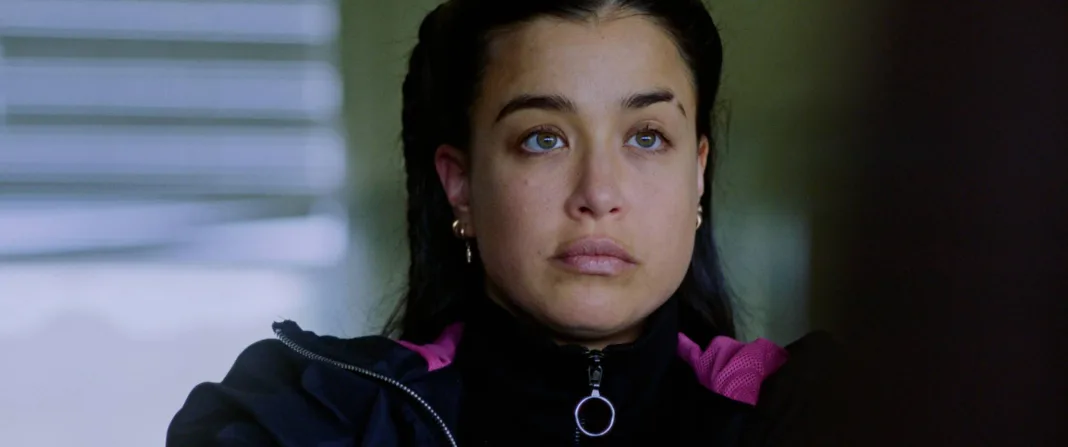
After «Verão Danado», which premiered at the prestigious Locarno Film Festival, Cabeleira returns with Entroncamento, his second feature—following the remarkable short by Flávio—shot in the town where he grew up. And you can feel it. The film follows Laura (Ana Vilaça), a young woman fleeing a turbulent past in Oporto, trying to start over in a city where railway lines intersect, but opportunities do not always do the same. Torn between an honest job and petty schemes, Laura drifts into an ecosystem of fragile friendships, small-time dealing, racial tensions and discounted dreams.
In «Entroncamento», Cabeleira does not offer social-tourism portraiture or a “best of” city showcase. He films with a handheld camera, gritty images, the texture of humid Ribatejo nights. There are echoes of John Cassavetes, a whisper of Pedro Costa, but above all there is a distinct authorial voice from a filmmaker who is no longer a newcomer: proximity to bodies, to voices, to the monotony that corrodes. Violence here does not explode; it murmurs. It lingers in café conversations, suspicious glances, invisible borders between communities. And they exist and sometimes clash: Roma families, Afro-descendants, Ukrainians, long-established residents and newcomers drawn by lower living costs than Lisbon. Entroncamento becomes a near-perfect microcosm of contemporary Portugal.
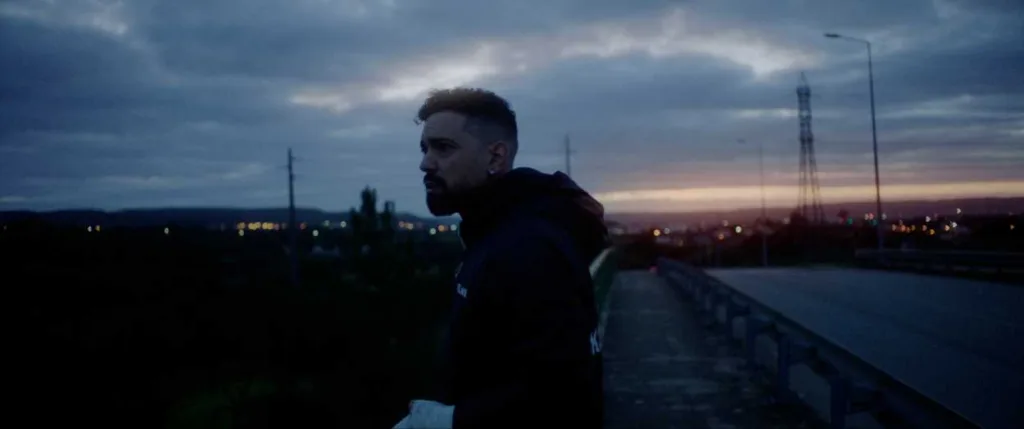
The director does not shy away from cultural, racial or political tensions, yet he avoids turning the film into a social pamphlet. He prefers observation through small gestures, long nights, alcohol and light drugs as anesthesia, and petty crime as an escape from stagnation.
The cast blends professional and non-professional actors, many local or from outside the country’s major urban centres. Cleo Diára once again leaves a mark, Rafael Morais brings restrained intensity, and several newcomers lend the film an unpolished authenticity that cannot be rehearsed. The cinematography, with its guerrilla energy, reveals greater formal maturity than in Verão Danado. There is growth here, but without losing urgency.
What is most compelling is that «Entroncamento» refuses to explain everything or to solve the city’s social problems. It simply observes. There is no moral lesson. Instead, there is the lingering sensation of those left behind, those who did not move to Lisbon or abroad, who live at a permanent crossroads without knowing which direction to take. Laura is both outsider and mirror: everyone here is searching for an exit, even if it is illusory.
«Entroncamento» is not polished export cinema tailored for the festival circuit; it is friction cinema. Portugal—or rather its railway-town microcosm—does not appear as a postcard, but as territory under tension.
From the African heat present in other recent Portuguese films, we move here to the damp urban night of the interior. There is a country beyond the capital. There are stories beyond Lisbon’s or Oporto’s cool neighbourhoods. There are forgotten youths who also deserve the big screen.
«Entroncamento» is precisely that: a crossing point of paths, of identities, of a Portuguese cinema increasingly willing to look inward without fear of getting its hands dirty.