



In a world marked by hatred, divisions and wars, a new film by José Luis Guerin was very much needed. A decade after his last feature, the «The Academy of Muses», the Spanish master returns with a documentary that is not quite a documentary. As in other works of his, it is permeated by a poetic impulse that transforms its subjects—yes, subjects, or perhaps characters, given that the casting process itself appears within the film—into figures that verge on the mythological, sculpted within a particular geography.
Why the title «Good Valley Stories»? Because a multitude of voices and individual experiences converge in Vallbona, a neighbourhood on the outskirts of Barcelona where Guerin set out to capture the face of a community life.
The film stands close in spirit to the seminal «En Construcción/Work In progress», which followed the transformation of the urban landscape in Barcelona’s Barrio Chino district, as well as to «Innisfree», in which Guerin retraced the steps of John Ford in the Irish village where the American filmmaker shot «The Quiet Man». «Good Valley Stories» rests on a deeply human dimension. Unlike most documentaries, which rely on the familiar logic of “tell us your story,” Guerin immersed himself in the life of Vallbona’s inhabitants—many of them migrants—forming relationships over the course of three years in order to capture what truly interested him: fragments of their everyday lives, their habits, their conversations, or moments of nostalgia that together sketch a living map of the place.
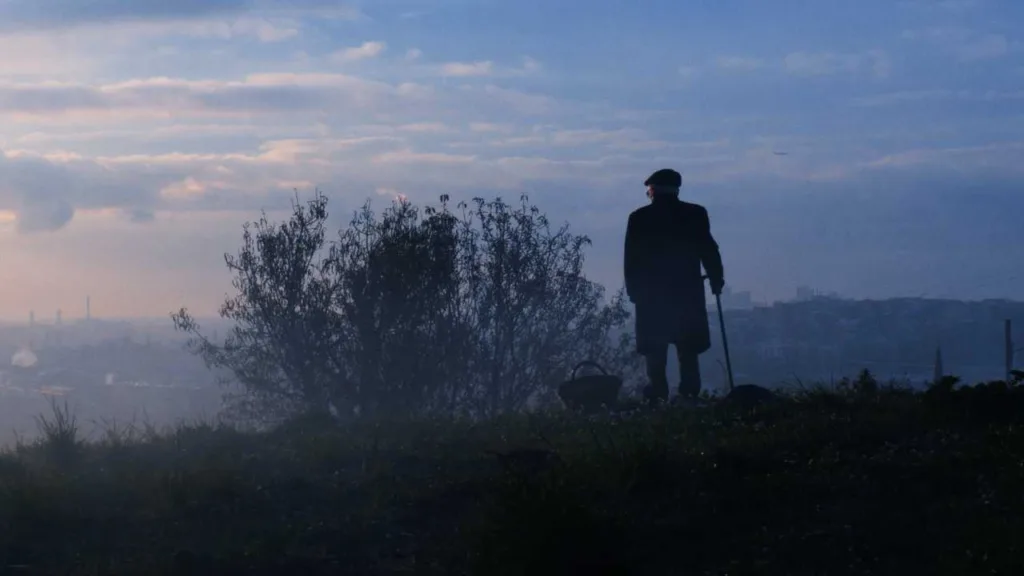
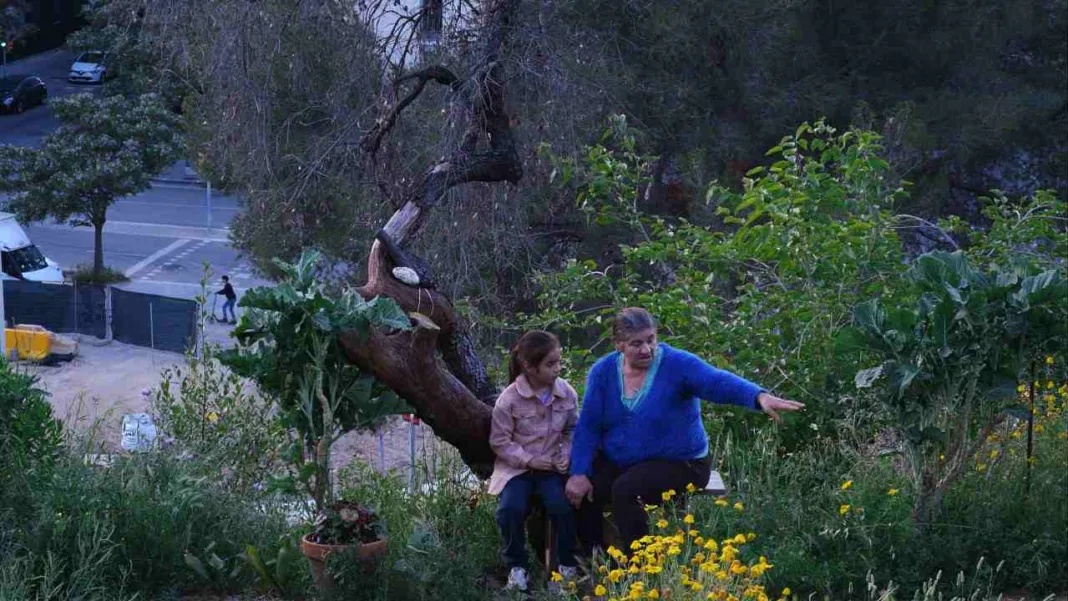
The result is profoundly moving. One cannot help but be captivated by Tatiana Radchenko, who watches her husband’s memory slowly fade while she plays the piano atop the newly built towers of this dormitory suburb. Equally touching is the Portuguese resident Fátima Dossantos, who lives in the rural fringes of the neighbourhood and takes her granddaughter to gather flowers across the green hills, using the walk to speak about trees and the dead. No less affecting is the elderly man with a fertile imagination who suggests to Guerin that he should make a western—a reference the director cleverly incorporates, framing the man’s silhouette with a certain aura as he gazes toward the horizon.
The presence of José Luis Guerin behind the camera rarely announces itself directly, yet it is felt throughout. There is a palpable affection in the way he reads those faces—indeed, the filmmaker himself used the word “love” to describe the stance of his cinema at the press conference of the San Sebastián International Film Festival, where the film received the Special Jury Prize—and an infinite respect for the humanity that unfolds before his gaze. What he seeks, quite simply, is the natural expression of bodies within a landscape.