



When we speak of French animation, the director who almost instantly comes to mind is Sylvain Chomet. There are other classic reference points—such as Paul Grimault and Michel Ocelot—but Chomet, with only two masterpieces to his name—«Belleville Rendez-Vous/The Triplets of Belleville» and ««L’Illusionniste/The Illusionist»—has come to define what might be called “a certain French line”, inseparable from French culture itself. Fifteen years after his previous feature, «The Illusionist», a film based on an original screenplay by Jacques Tati, «Marcel et Monsieur Pagnol/A Magnificent Life» returns to that same impulse: a cinema that celebrates the authors of its own culture.
The connection between the two films is inevitable. If, in «The Illusionist», Chomet adapted Tati’s script to animation while paying tribute to him through the recognisable silhouette of Mr. Hulot — here imagined as an illusionist whose craft is slipping into decline — «A Magnificent Life» likewise captures the moment when the playwright and filmmaker Marcel Pagnol (1895–1974) began to sense the accelerating pace of a world that would soon lose interest in his plays. The essential difference is that the earlier title, despite evoking both a character and his creator, unfolded as a delicate and moving fable; here, the conventions of biography take firm hold of the film about Pagnol.
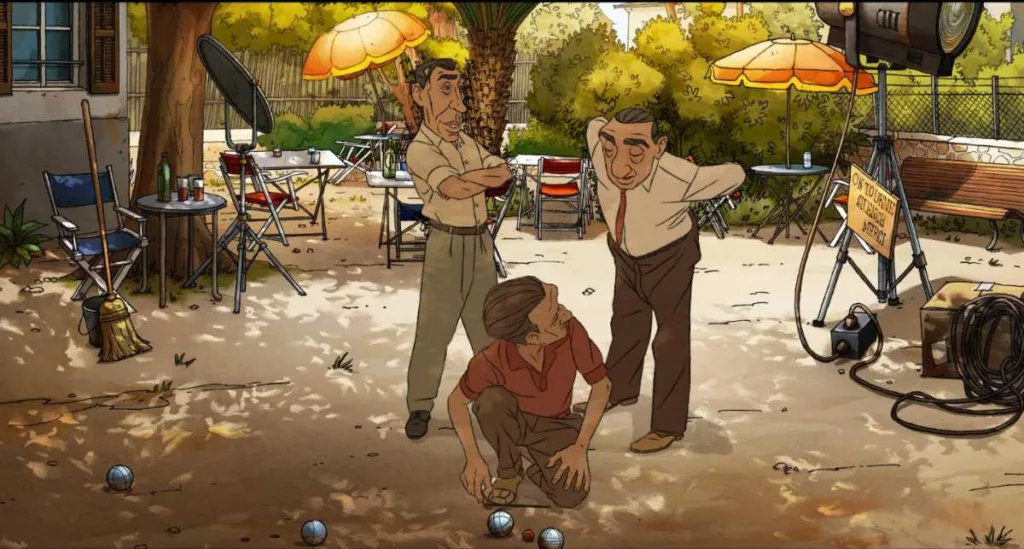
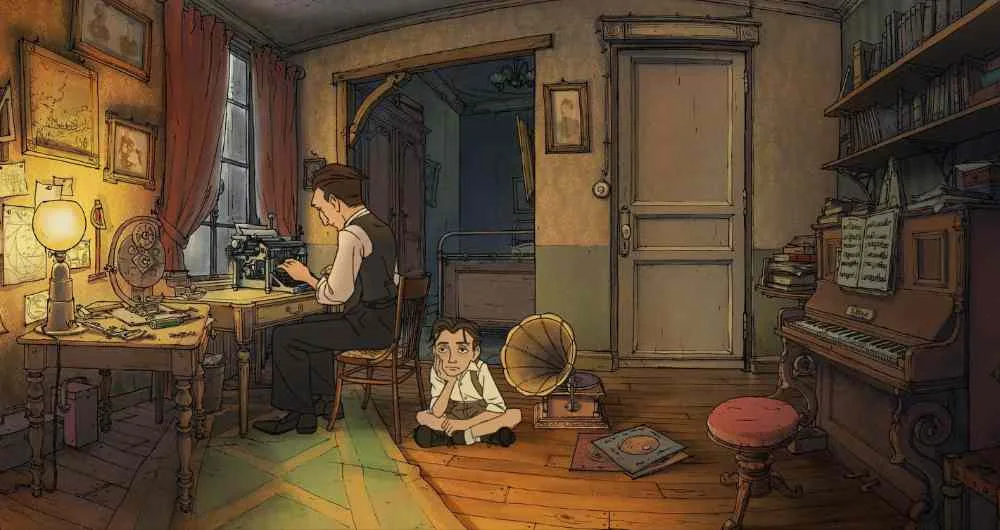
Chomet’s drawing remains distinctive, proudly French, imbued with a sweetness and nostalgia that are unmistakable. Yet it is hard not to notice that, on a narrative level, «A Magnificent Life» relies more on formula than invention, resulting in a film that is incredibly beautiful though rarely surprising. The story begins with a commission: the editor-in-chief of a women’s magazine asks Marcel Pagnol to write a serialised account of his life, his origins, his loves for the publication’s readers. Seated at his desk, the director of «La Fille du Puisatier/The Well-Digger’s Daughter» finds himself uninspired, until a visit from the child he once was awakens memories and sensations long stored away in the attic of his mind.
From there we follow episodes of his childhood in Marseille, his flight to Paris —“where everything was happening” in the 1920s—his work in the theatre and later in cinema, a trajectory also marked by the upheavals of the Second World War. For those who know and admire Pagnol’s cinema—as is certainly the case here—this biopic emerges as a valuable companion piece. Outside the French context, however, it is possible that «A Magnificent Life» may not resonate strongly with wider audiences, remaining in that curious limbo of animation made for cinephiles. Sylvain Chomet has crafted a charming, comforting biography—what it lacks is the impulse to break free from the familiar mould of the genre, as we might have hoped he would.